
A counter-intuitive discovery
Recently, while analyzing an article on the website, I discovered an unexpected phenomenon:
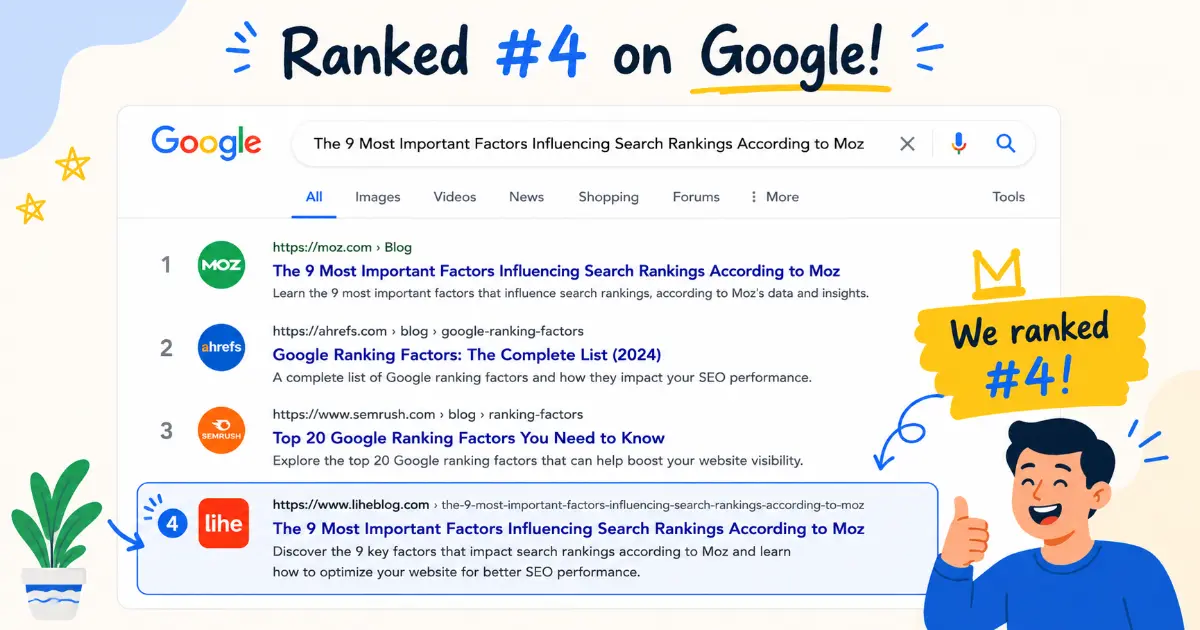
Article “The 9 Most Important Factors Influencing Search Rankings According to Moz” was included by Google and ranked on the first page in the SERPs, ranking 4-7, appearing at the same time as the search results on the Moz official website. However, after careful inspection, it was found that the three core keywords “moz ranking factors”, “moz seo ranking factors”, and “moz search ranking factors” appeared in the title, H1, and body text all at zero times.
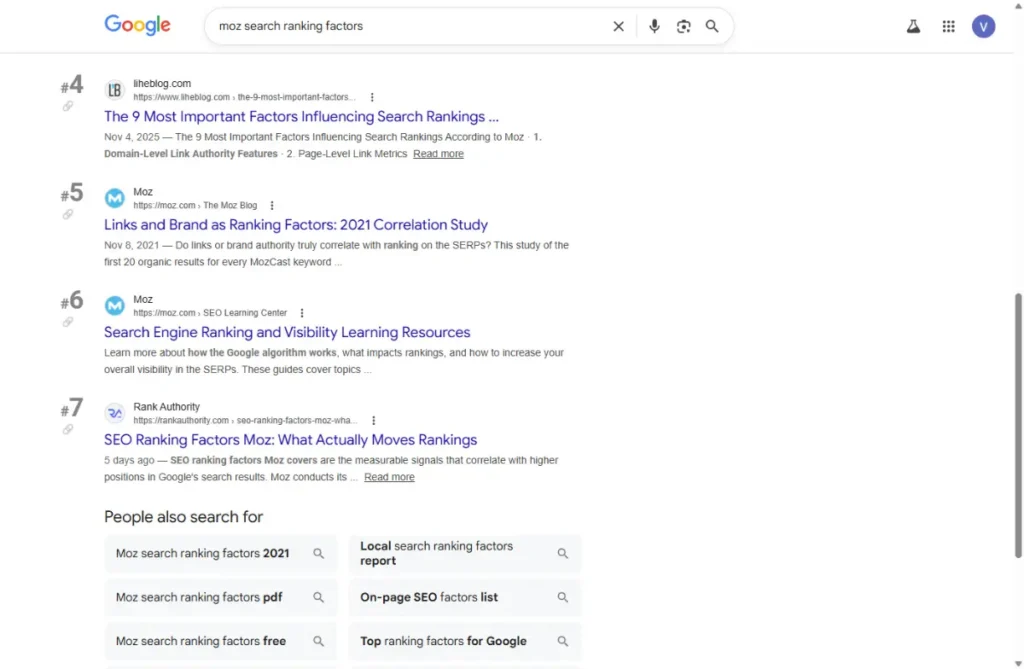
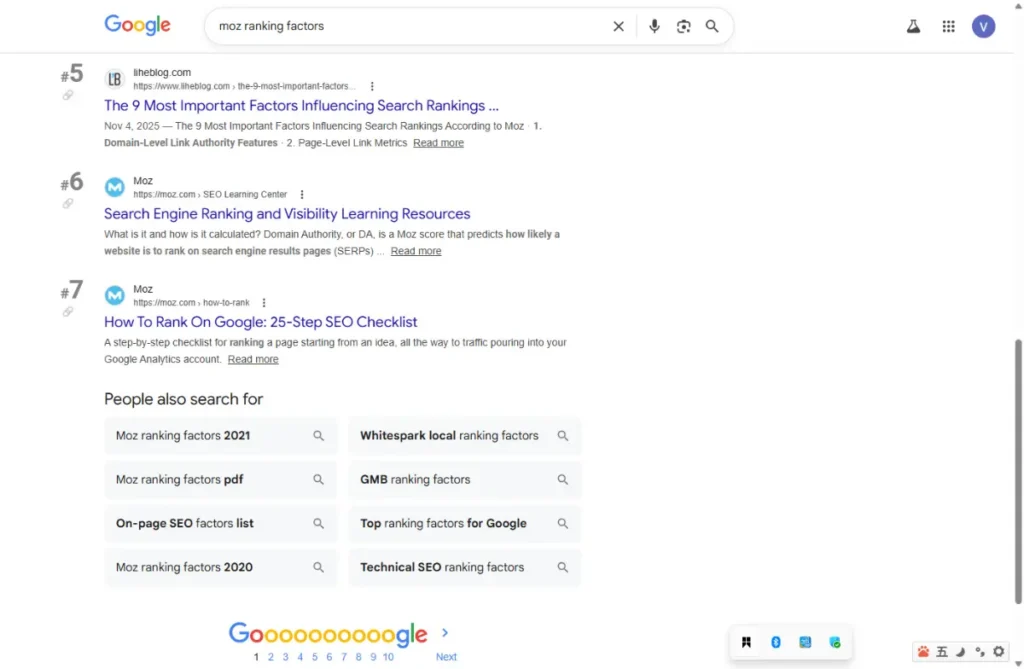
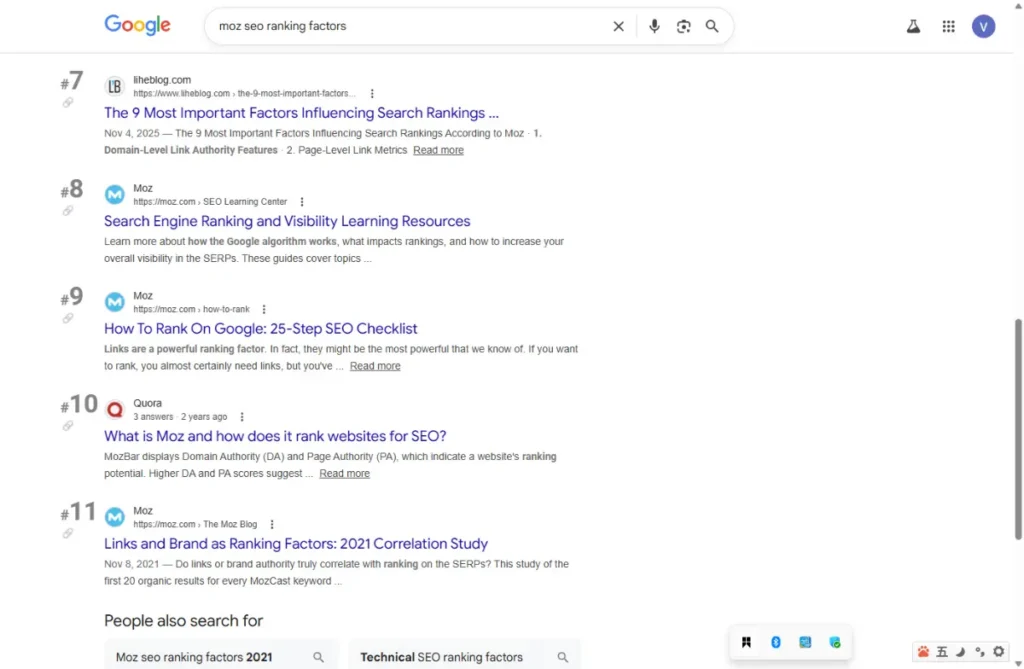
According to traditional SEO thinking, this is almost impossible to happen. Keyword density is zero, why rank?
But this phenomenon reveals a profound shift: search engines have evolved to understand “content themes” rather than just matching “keyword characters.”
Why does Google consider keywords that are not on the page to be “relevant”?
1. What did we check?
Based on the popular queries displayed on the Google search console, I checked the exact matches of the following 3 keywords:
| Keywords | Title | H1 | Body | Density |
|---|---|---|---|---|
| moz ranking factors | ❌ | ❌ | ❌ | 0.00% |
| moz seo ranking factors | ❌ | ❌ | ❌ | 0.00% |
| moz search ranking factors | ❌ | ❌ | ❌ | 0.00% |
2. Why does Google rank it?
The answer increasingly clearly points to factors other than the keywords on the page, mainly including:
(1) Semantic Relevance
Google no longer relies on “exact match” but understands entities and topics.
The page title of the article is “The 9 Most Important Factors Influencing Search Rankings According to Moz”:
- Contains “Moz” (brand entity)
- Contains “ranking factors” (core topic)
- The content directly summarizes the 9 factors that affect rankings published by Moz.
When a user searches for “moz ranking factors,” Google determines that the page provides the information the user wants, even if it doesn’t match it word-for-word.
(2) Strong co-occurrence of brand words + core words
When both appear on the page:
- “Moz” (explicit brand)
- “ranking factors” (recurring)
The semantic binding between the two is tight enough that Google understands it as “Moz’s version of ranking factors.”
The evolution of search engines: from matching keywords to understanding intent
This phenomenon also confirms Google’s changes in core directions and algorithms in recent years:
| Stage | Core logic | Representative algorithm |
|---|---|---|
| Early days | Keyword matching + number of links | PageRank |
| After 2013 | Semantic understanding + knowledge graph | Hummingbird |
| After 2019 | User intent + entity relationship | BERT/MUM |
| Now | Multimodal understanding + deep semantics | SGE (Search Generated Experience) |
Search engines are getting “smarter”. It no longer mechanically looks for “how many keywords are there in the page”, but tries to understand:
- What is this page talking about theme?
- What can this page answer to the user question?
- After users click on this page, will they satisfy?
This is why a page that doesn’t contain the exact keyword can still rank because Google understands its “meaning.”
SEO action guide based on this finding
1. The content level should focus on the theme rather than stacking keywords.
It’s not about overturning traditional SEO methods, such as “list target keywords → calculate density → force insertion”, but to think about deeper issues:
- Make it clear what the core appeal is that the page wants to answer, what value it can bring to the audience, and whether it can satisfy their search intent.
- Complete, in-depth, structured coverage of the topic.
- Let the semantics appear naturally, rather than “write it for people to read and fool the machine.”
2. Understand and follow the new normal of SEO
This phenomenon of “a page without keywords but ranking on the home page” is not a special case, but a sign of a trend, that is, SEO is changing from a “keyword matching game” to a “user intent-satisfying competition.”
| Old ideas | New ideas |
|---|---|
| What is the keyword density? | Is the topic coverage complete? |
| How to stack more words? | How to better satisfy search intent? |
| How many external links are there? | Is the content citation-worthy? |
| How does it rank? | What about click-through rates and dwell time? |
The future of SEO belongs to those who can not only understand the logic of algorithms (science), but also have insight into user psychology (art), and can continue to output truly valuable content. SEO is also an infinite game. Every discovery and every adjustment is an accumulation of better performance for the next time.
Looking at the essence of SEO from the phenomenon of “Zero keywords but ranking on the first SERP”: “Intent understanding” surpasses “Literal matching”